Why Did My Concrete Driveway Crack So Soon?
Full Article
A concrete driveway should last decades. When one cracks apart in five or six years, the concrete almost never turns out to be the problem. What's under it is.
This comes up constantly in New York, and it frustrates people for an understandable reason: concrete looks like the simplest material on the property. It's a slab. It sits there. How complicated can it be?
The answer is that a driveway is a structure, and like any structure it's only as good as what supports it. Concrete is enormously strong in compression, meaning it handles weight pressed straight down. It's weak in tension, meaning it cracks easily when it gets bent or pulled. A slab sitting on a properly compacted base never bends. A slab sitting on soft or uneven ground bends every time a car drives over it, and eventually it breaks.
So when we look at a failed driveway, we're not really evaluating the concrete. We're reading it for clues about what happened below.
Reason One: The Base Was Never Compacted
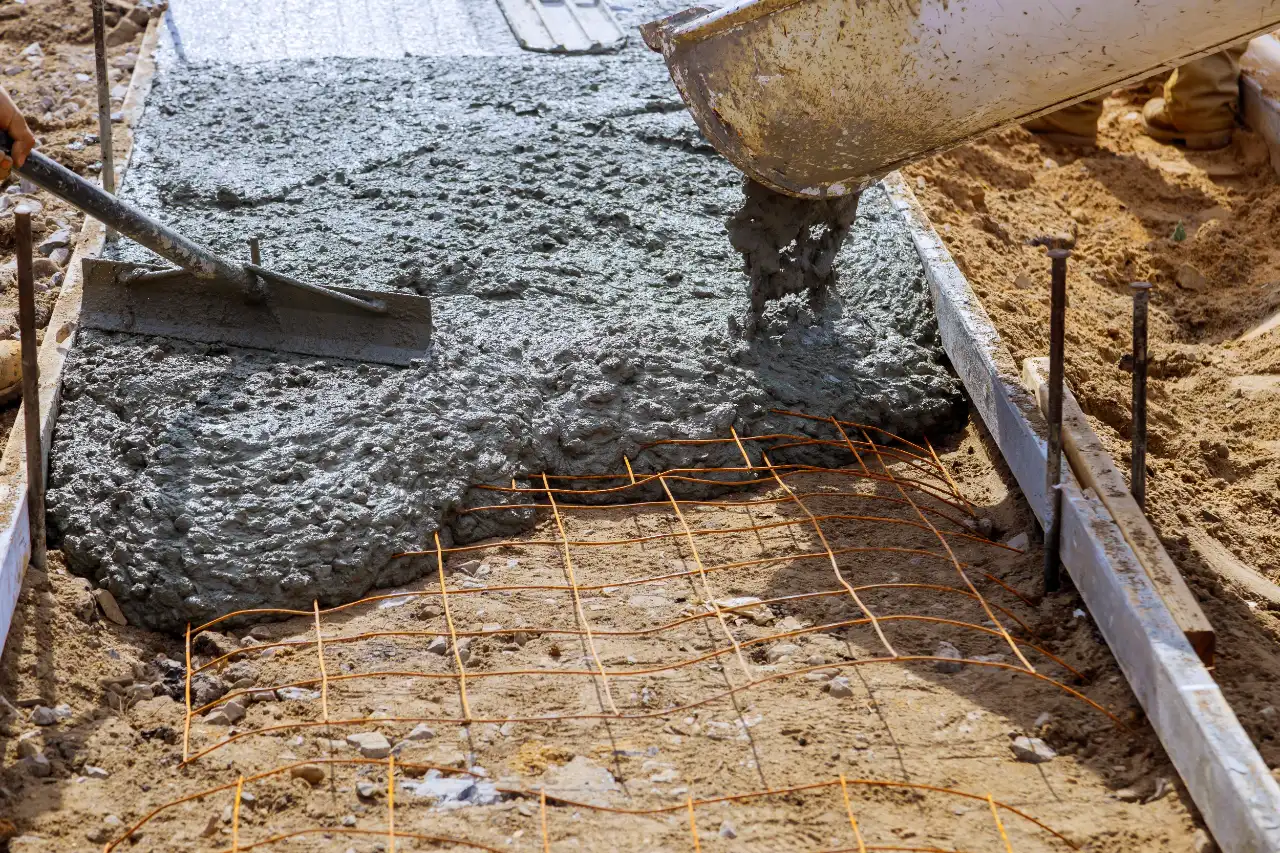
This is the most common cause by a wide margin. Concrete needs uniform support across the entire slab. That means excavating to depth, laying a graded stone base, and compacting it in lifts with a plate compactor or roller.
Skipping that saves a day of labor and a few loads of material, and it's invisible the moment the concrete goes down. The driveway looks perfect for a year or two. Then the soft spots settle, the slab loses support in those areas, and it cracks along the line between supported and unsupported.
On Long Island this shows up faster than anywhere else in the region, because sandy subgrade drains beautifully but compacts poorly. Without a proper stone base over it, sand shifts under load and takes the slab with it.
Reason Two: No Reinforcement, or Reinforcement in the Wrong Place
Rebar and wire mesh don't stop concrete from cracking. They hold it together after it cracks, which keeps the pieces working as one slab instead of separating and settling independently.
For that to work, the steel has to sit near the middle of the slab thickness. Steel lying on the ground does nothing at all, because it's below the zone where tension occurs.
This is where a lot of driveways get quietly compromised. Mesh gets rolled out on the grade, concrete gets poured over it, and nobody lifts it into position during the pour. It's still technically reinforced. Functionally it's a plain slab with some rusting metal in the bottom inch.
Reason Three: Missing or Badly Spaced Control Joints
All concrete cracks. That's not a defect, it's a material property. Concrete shrinks as it cures and continues moving with temperature for its entire life.
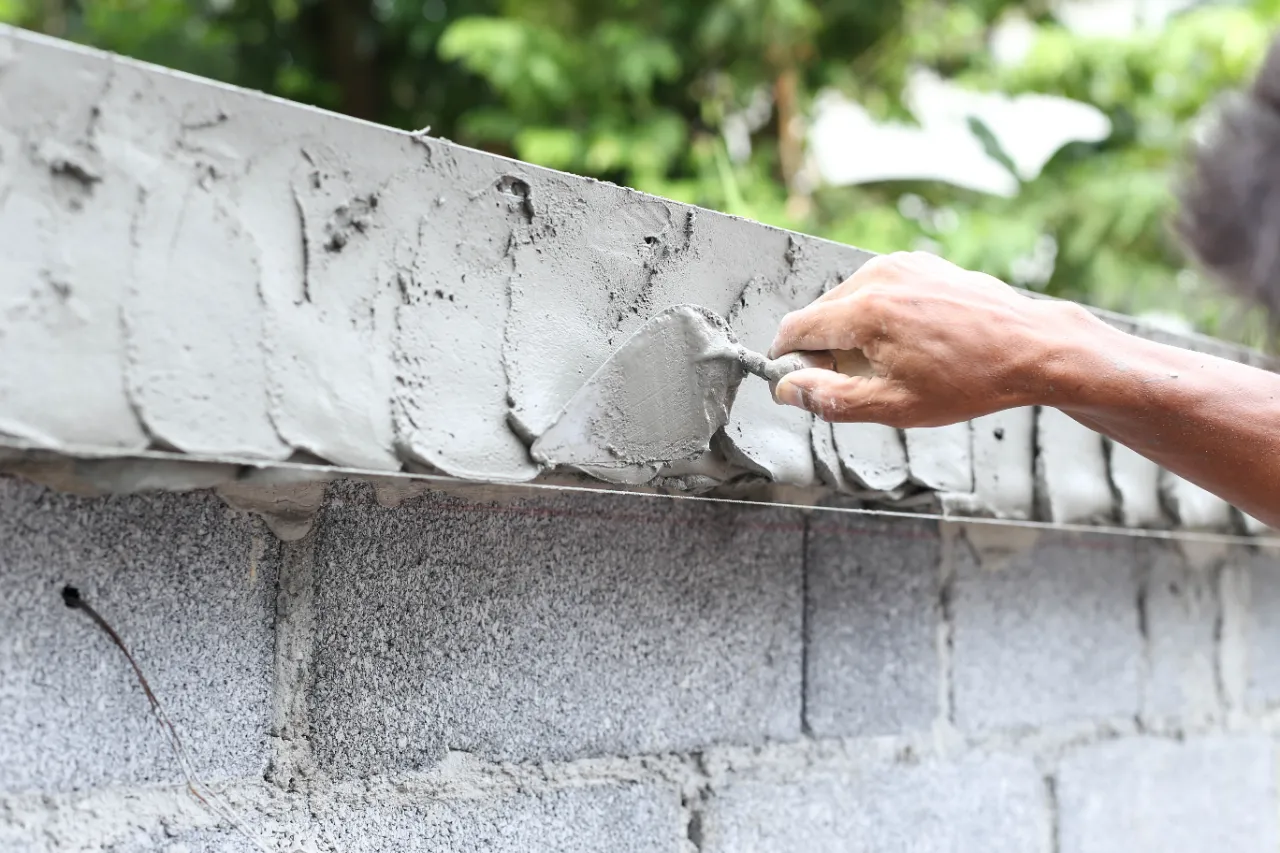
Control joints are deliberate weak lines cut into the slab so it cracks where you chose rather than randomly across the middle. They need to be cut at the right spacing for the slab thickness, and cut deep enough to actually work, roughly a quarter of the thickness.
Joints cut too shallow, spaced too far apart, or skipped entirely mean the slab picks its own crack lines. Those are always uglier, they're never straight, and they open wider over time because nothing was guiding where the movement would go.
Reason Four: Freeze and Thaw Without Air Entrainment
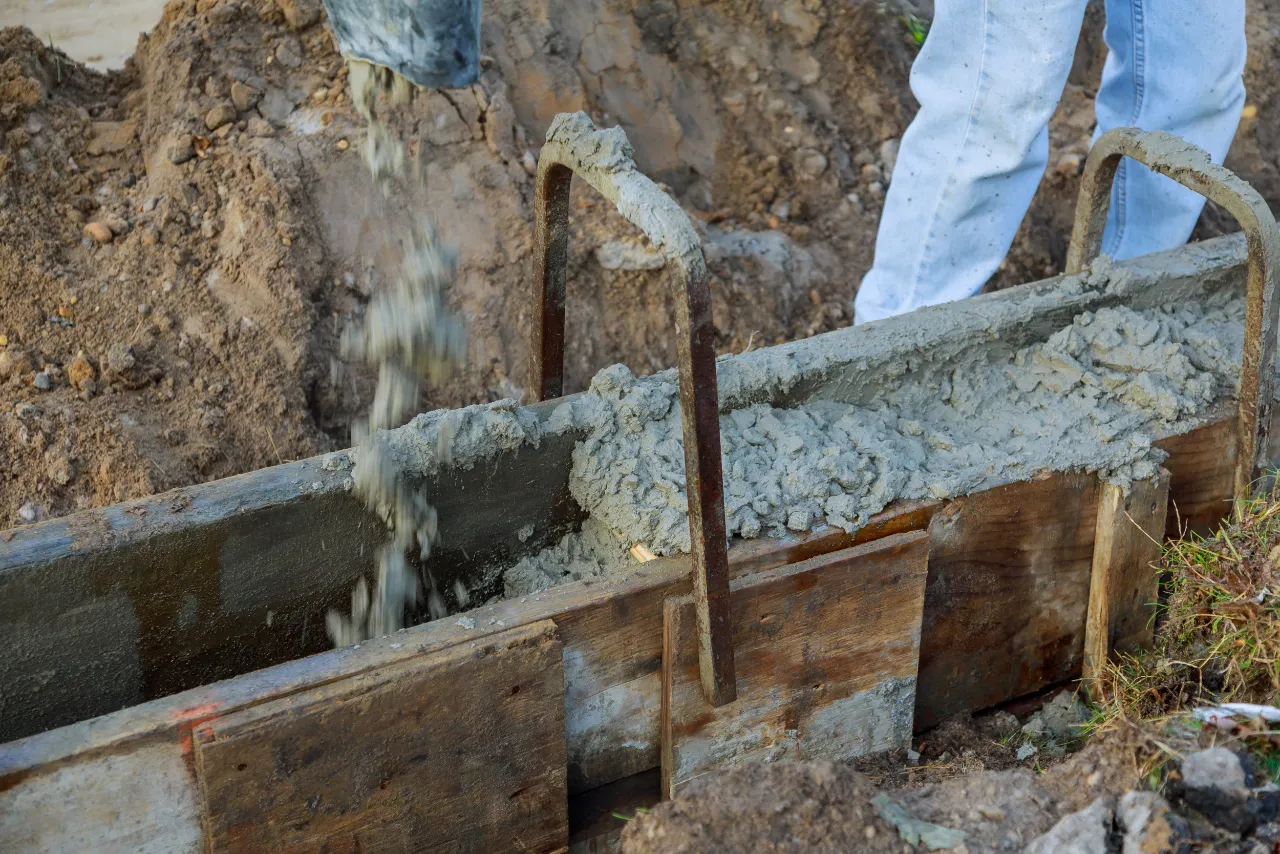
New York winters put concrete through repeated freezing. Water that soaks into the surface expands when it freezes, and that expansion pushes the concrete apart from the inside.
Air entrained concrete contains microscopic air bubbles distributed through the mix. Those bubbles give the expanding ice somewhere to go, which relieves the pressure. It's a specification, not an upgrade, and any exterior slab in this climate should have it.
Surface scaling, where the top layer flakes off in sheets and exposes the aggregate, is the signature of freeze damage. Road salt accelerates it dramatically, which is why driveways and sidewalks in the Bronx and Queens tend to fail at the surface before anything structural goes wrong.
Get Your Concrete Driveway Estimate in New York
We excavate to depth, compact the base, and tie reinforcement where it belongs. Free written estimate, fully itemized, with no obligation.
Request Your Free Estimate
No obligation. We respond within 2 hours.